
Spectrum | Cassini
Three small satellites hosting payloads for companies across Europe as part of the ESA-European Union IOD (In-Orbit Demonstration) and IOV (In-Orbit Verification) programs.

Three small satellites hosting payloads for companies across Europe as part of the ESA-European Union IOD (In-Orbit Demonstration) and IOV (In-Orbit Verification) programs.


First of up to 25 launches of Low Earth Orbit technology demonstration satellites to be built and operated by Lockheed Martin. TacSat is an intelligence, surveillance and reconnaissance spacecraft with a mission to prove specialized sensing and communications capabilities on orbit. The satellite will participate in exercises that highlight cross-domain kill-web connectivity, enabling timely execution of tactical space missions. TacSat will host a proven Lockheed Martin infrared sensor on board that brings previously developed technology to space for the first time. This sensor produces high quality imagery and it can interface with federated Battle Management Command & Control (BMC2) combat systems to provide joint forces with a comprehensive view of threats. The satellite will also feature Lockheed Martin’s first 5G.MIL® payload on orbit. This provides cellular-like networking for military space assets, making satellite constellations more resilient. It also helps enable seamless connectivity with tools in the air, at sea and on land. Launch operation will also again demonstrate responsive space pre-launch operation capabilities.

Impulse Space's Mars Lander is designed to support research and development needed for human exploration of Mars.

Classified payload for the US National Reconnaissance Office

24 satellites for Rivada's internet constellation.

Classified payload for the United States Space Force

Tranche 1 Transport Layer F is one of six missions by the United States Space Force Space Development Agency (SDA) for the Proliferated Warfighter Space Architecture (PWSA) Tranche 1 Transport Layer constellation, which will provide assured, resilient, low-latency military data and connectivity worldwide to the full range of warfighter platforms from Low Earth Orbit satellites. The constellation will be interconnected with Optical Inter-Satellite Links (OISLs) which have significantly increased performance over existing radio frequency crosslinks. It is expected to operate over Ka band, have stereo coverage and be dynamically networked for simpler hand-offs, greater bandwidth and fault tolerance.

Classified mission launched by the Space Development Agency (SDA) for Tranche 2 Transport Layer.

Shenzhou 24 will be the 24th flight of the Shenzhou program.

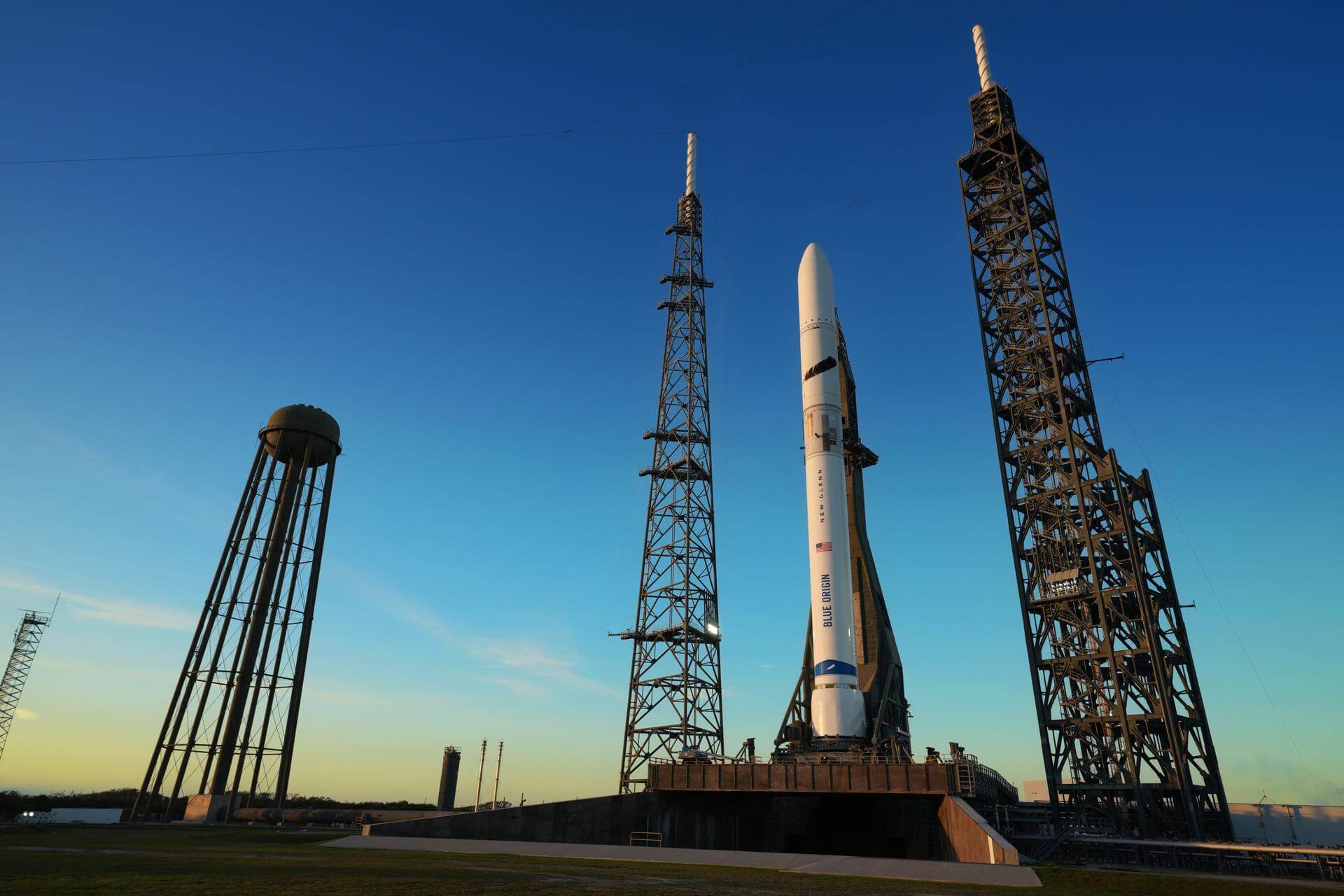
Amazon Leo, formerly known as Project Kuiper, is a mega constellation of satellites in Low Earth Orbit that will offer broadband internet access, this constellation will be managed by Kuiper Systems LLC, a subsidiary of Amazon. This constellation is planned to be composed of 3,276 satellites. The satellites are projected to be placed in 98 orbital planes in three orbital layers, one at 590 km, 610 km and 630 km altitude. 48 satellites will be carried on this New Glenn launch.

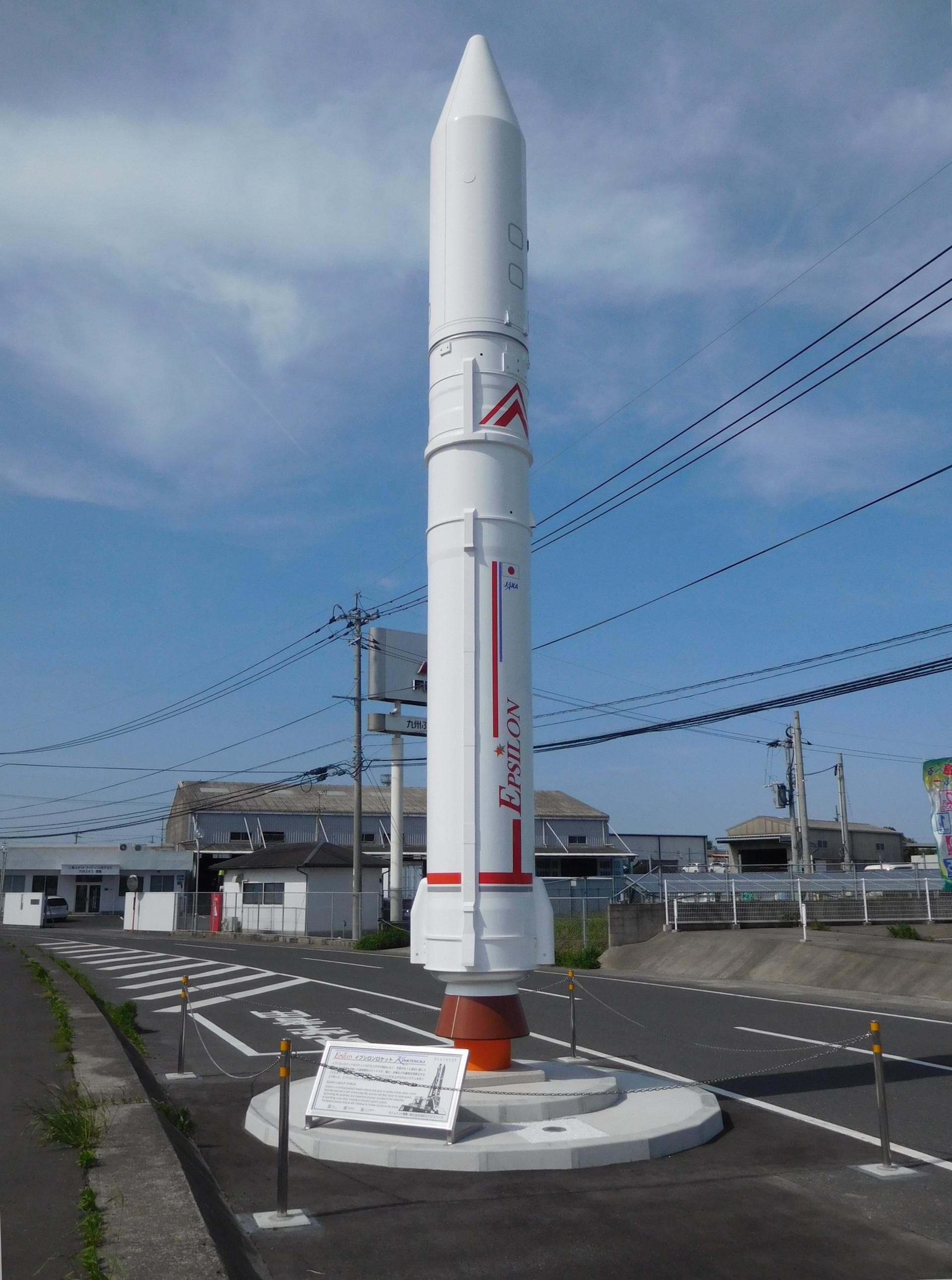
Vietnamese Synthetic Aperture Radar Earth observation satellite build by NEC Corporation of Japan, based on Japan's ASNARO 2 satellite and the NEXTAR NX-300L satellite bus. The satellite will contribute to measures against natural disasters and climate change in Vietnam.